In the 12 years and roughly two console generations since the North American 3DS debut of Tomodachi Life, much has changed across the gaming landscape. For example, the advent of the “cozy game” genre—popularized in no small part by the release of Animal Crossing: New Horizons during the height of the COVID pandemic—has opened up even more of the marketplace to the notion of relaxing and largely non-violent gameplay.
This, coupled with the recent arrivals of both a much-needed content update for New Horizons and the spectacularly charming, narratively driven Pokémon Pokopia, has really set the stage for the return of surrealist city-building sequel Tomodachi Life: Living the Dream. Arriving this week on the Nintendo Switch family of systems (MSRP $59.99), Living the Dream takes everything weird and wonderful about the handheld original and super-sizes it, offering untold hours of enjoyment with only a couple of minor shortcomings.
In addition to a nicely revamped Mii creation system (which I lovingly detailed in last month’s preview coverage), Living the Dream‘s other obvious immediate upgrade is your Miis’ homes. Despite a real-world economic downturn, the inhabitants of your new Tomodachi Life island have moved on from apartment living to begin their virtual lives in brightly colored private bungalows that coordinate with their starting outfits and are determined by their overall personalities (like Ambitious : Achiever or Reserved : Perfectionist).
You’ll arrange these houses around the central Wishing Fountain on an initially meager atoll. Powered by the Warm Fuzzies acquired from your Miis, this Wishing Fountain is a singularly important feature, but it’s not your island’s only landmark.
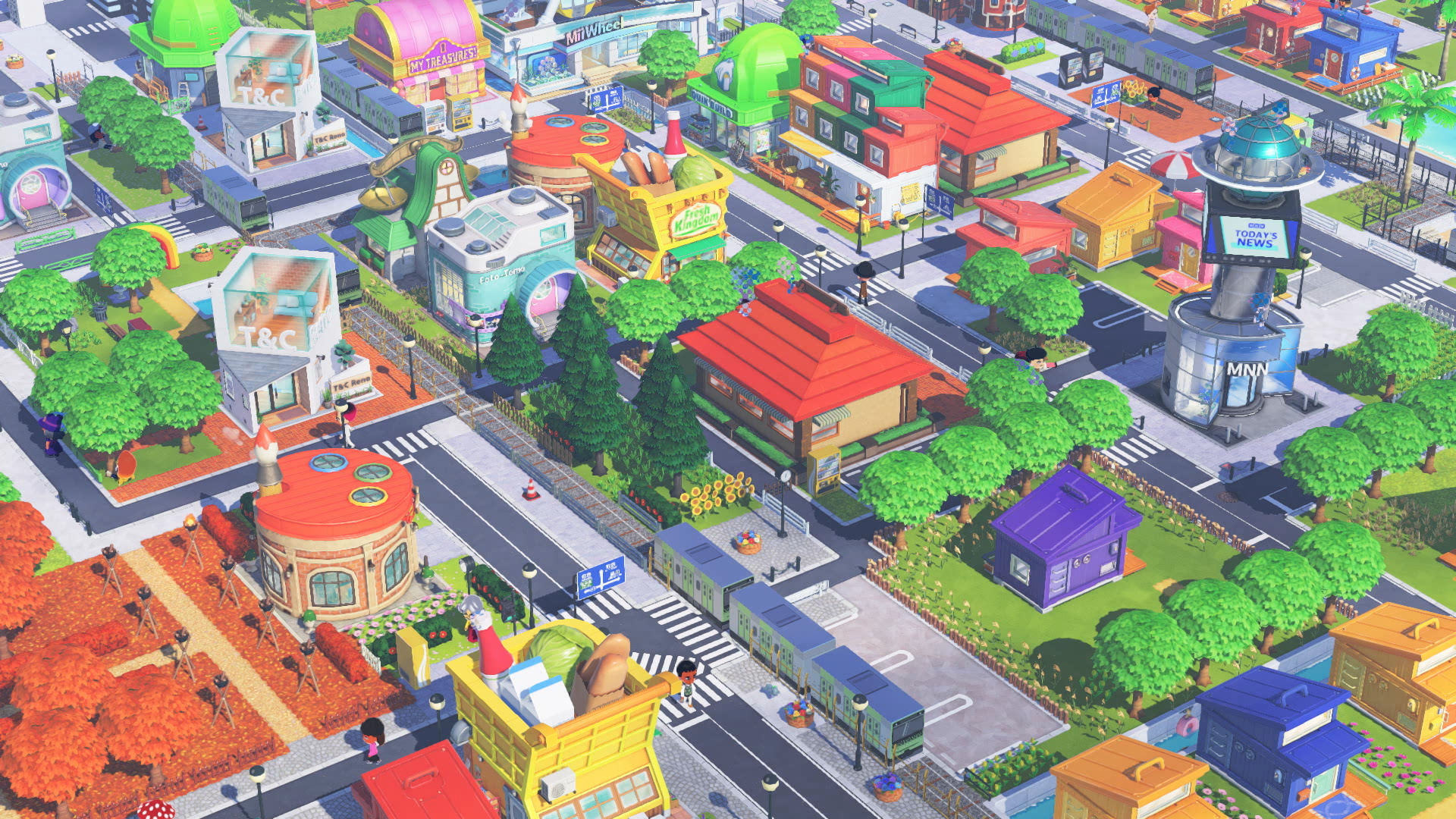
Various unlockable amenities such as the MNN news station, Tomoria restaurant, Fresh Kingdom food mart, and Where & Wear clothing will (eventually) span from shore to shore. These locales provide backgrounds for your inhabitants’ silly interactions, as well as ways to acquire the clothing, food, and accessories they desire.
And their desires, as always, are paramount.
In time, you’ll be able to customize everything, from Miis’ individual homes to the island’s shoreline, paths, trees, and flowers—with additional options for things like clothing and food of your own creation.
Fueled by those Warm Fuzzies and the steady trickle of cash you acquire from your citizens, growth and advancement are rewarded with… well, more growth and advancement. Better items, new facilities, and simply more content overall are the carrots that keep the story of your island community moving ever forward. As the island grows in size—I believe mine reached its maximum square footage at around half capacity, or 35 Miis— it increases its quality of life and its very culture.
Miis regularly ask you, their creator, probing questions about your own likes, hopes, and dreams, and your answers become a part of island lingo, little conversation starters that your Miis use to communicate. My favorite movie? Suspiria. A treasured pastime? Drinkin’. My preferred villain? Magneto. Each of these little nuggets, for good or ill, has become a part of my Living the Dream experience.
Unfortunately, though, it seems like these words are just that: words.
For example, when pressed about a famous person I’d like to meet, I typed Bea Arthur. Shortly thereafter, ol’ Dorothy Zbornak was the talk of the town. However, when I moved Bea herself to the island—it was as easy as choosing “Add a Mii” from the in-game menu and giving her all the humor and sass of the original—no one ever really made the connection between this hot topic and our newest citizen.

The menu, I might add, is a perfect little piece of UI. Press X to bring it up, and it slides in from the right side of your screen. Here you have easy access to your settings and save function, Mii creation, your resident list, and even more exhaustive resources like your item catalog and island info. The latter provides all your residents’ personalities and lingo, as well as the seemingly nebulous “additional details.”
This was where I spent an exorbitant amount of time monitoring my care record (basically, the happiness and accomplishments of my Miis), my land/object use, and some cool demographic data. My island’s average age, it seems, is 44.4 years old. Also, my island vibe is “survivalist island,” which is… never really explained.
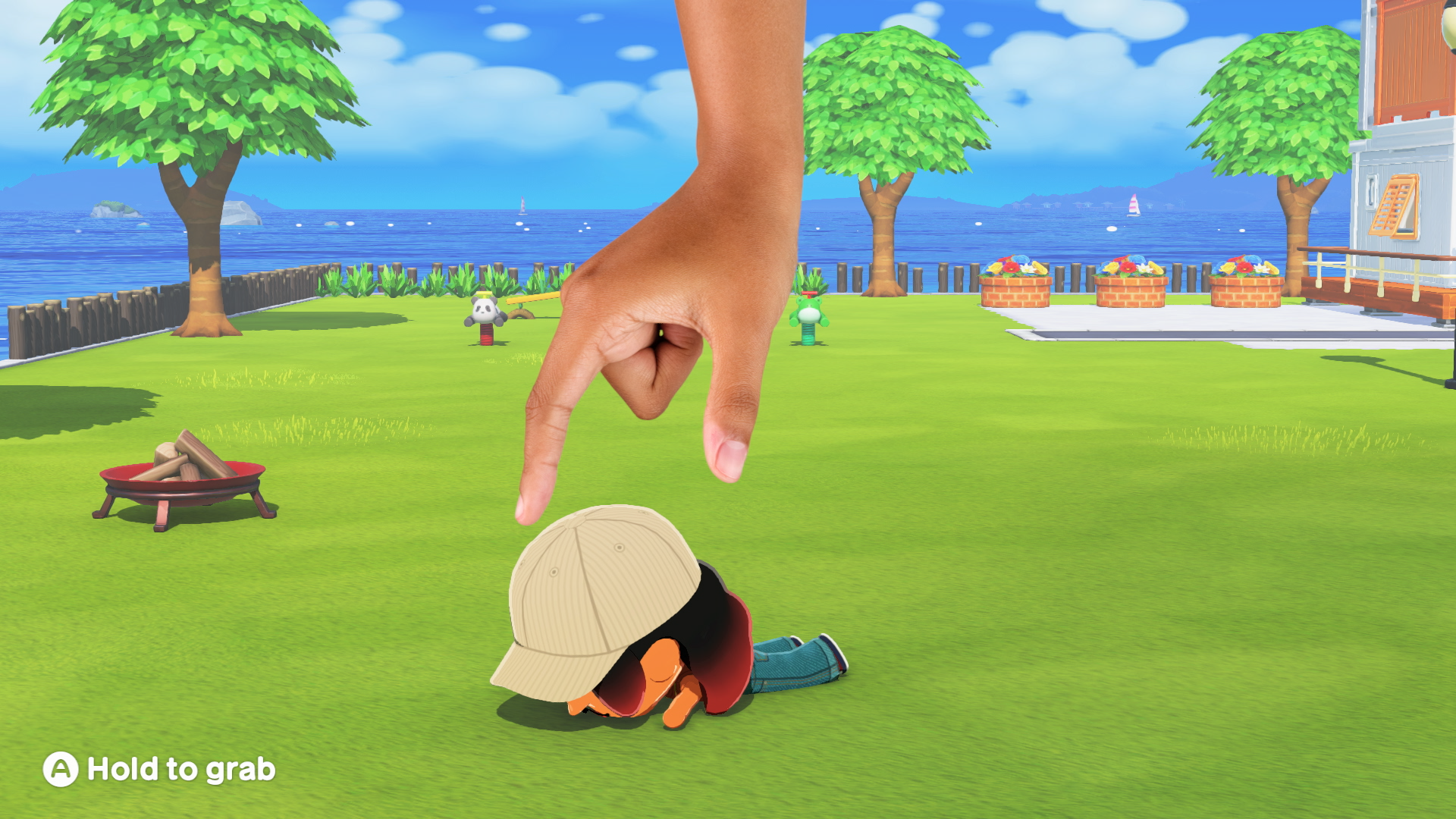
Land use and lingo aside, Living the Dream really is all about the Miis. Sometimes they are content to make their own decisions and live their own tiny, digital lives, but other times they crave divine intervention. Mapped to the Y button is a Mii quick menu. Press it to open a scrollable list of your occupants, complete with various indicators to let you know of any currently in-progress drama.
Some might be dreaming (indicated by the Mii dressed in PJs and a nightcap). You can select them to view the dream, which usually unlocks food or other items. They may also be satisfied, angry, or out of sorts—situations you can choose to address or just let them be—but often they’ll actively need your attention.
Indicated by flashing icons or colored thought bubbles, these occurrences are the bread and butter of the Tomodachi Life experience, where all that mad magic really happens. Maybe they’re having intrusive thoughts they need you to dispel, or perhaps they just feel a bit peckish. It could be that they want new clothes or to live in a new environment. Sometimes they’ll want to play a game of object identification with you, which provides a shot at unlocking additional treasure items.
Along the way, Miis can discover their favorite foods (complete with over-the-top cutscenes), play with the pets and treasures you, their benevolent god, provide them, and can even be rewarded with specialty goods and personality quirks as they level up, all serving to make them more properly fleshed-out characters.
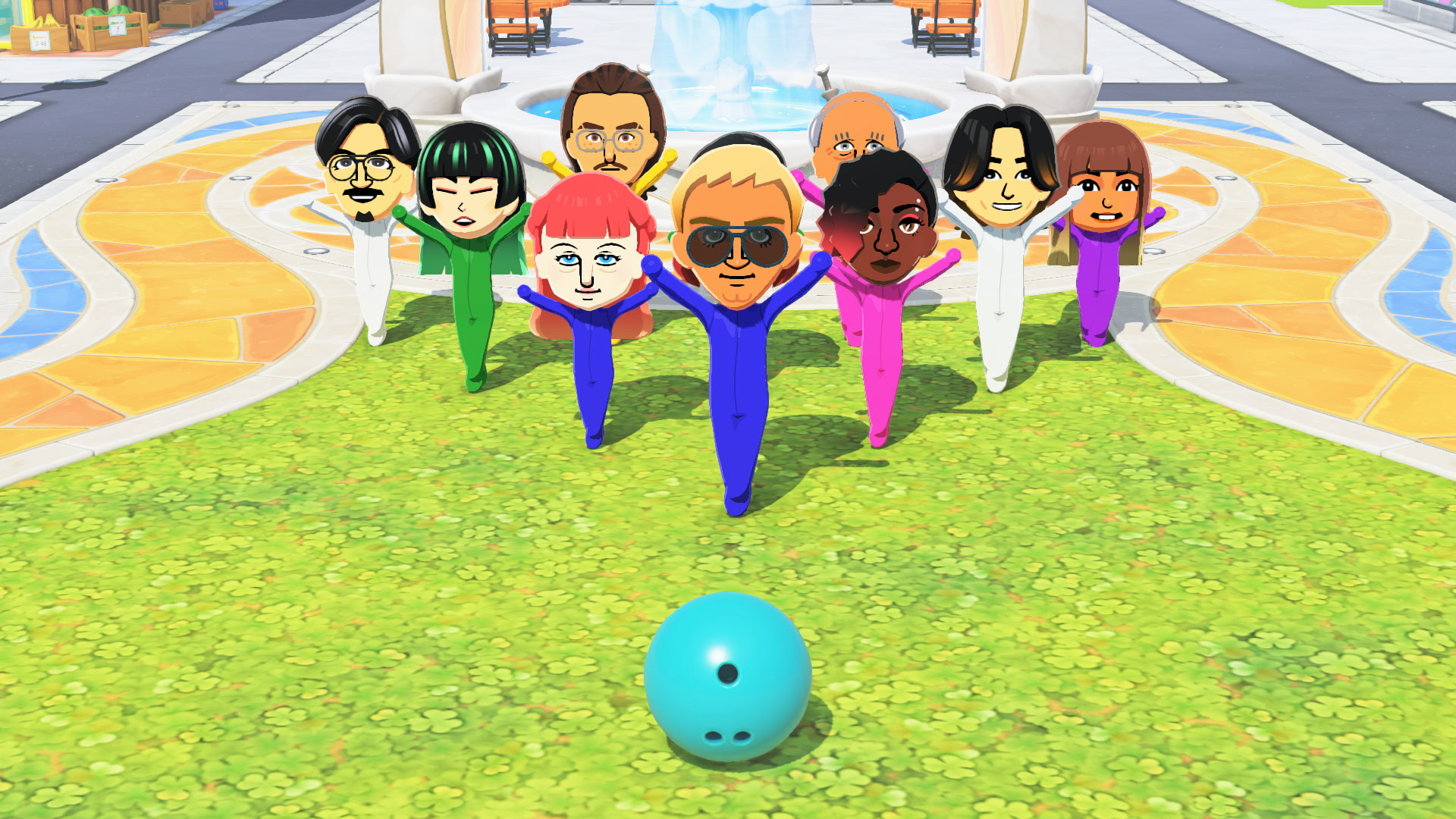
Still, food, clothing, shelter, and your undivided attention won’t always satisfy your quirky islanders. They seek interpersonal connections with their fellow Miis.
Just like in real life, some folks hit it off, and some don’t. Sometimes a strong friendship can develop into romantic feelings, and even marriage, and other times there can be a rare and volatile instant infatuation.
None of this guarantees that the other party is interested, though, and whether it’s moving in as platonic roommates, pursuing a more romantic endeavor, or tying the knot, love is a two-way street. As your island’s de facto creator, you do have a little pull. You can place two Miis close together to prime interaction via a meet-up and actively encourage their interest in each other. But not even this is a surefire way to play ultimate matchmaker.
That isn’t a bug but a feature.
In fact, it’s Tomodachi Life‘s secret weapon. You can try your best to mold a character into what you want them to be, only to discover that they have different plans.
Living the Dream provides a wonderful system for creating in-game analogues of your friends, family, and favorite celebrities, complete with personality preferences, flexible forms of gender expression, and a some-all-none approach to romantic attraction. You can tailor these things to your liking, fine-tune them with personality quirks such as the way they move, stand, or speak, and put them close to those you want them to mingle with, but you can’t make them love (or, for that matter, like) each other. Hell, you can’t make them like fried chicken! Such is life, and such is Tomodachi Life.
Whether you discovered the series yourself at launch, later in the 3DS lifespan, or simply came across it well after the fact when your favorite streamer played it, you’ll find all the very best that it has to offer here in Tomodachi Life: Living the Dream—and much, much more!
There are so many things going on here in Living the Dream, so much canvas on which to paint, that it’s hard to find anything to complain about. (Not that this will stop me.)
The current online scuttlebutt seems to be focused on the game’s maximum number of Miis. It’s 70, down from the 3DS iteration’s 100. I understand the concern, but for me, that’s proven to be more than enough characters to keep me occupied.
My only real gripe concerns the lack of two quality-of-life features present in the original. The first is touchscreen support, which was very much integrated into the bulk of the 3DS gameplay, but here on the Switch is rather hit or miss.
Yeah, I can use it during Mii creation and some of the minigames, but it’s surprisingly absent from big swaths of the rest of the title, like navigating the map or the important Island Builder mode. Also, while the previous release had a QR-code system for easily sharing and importing Miis, Living the Dream does not. I understand that this specific feature relies heavily on an in-game camera, which the Switch lacks, but I’d love to see some kind of code-based system or online sharing platform integrated at a later date.
That all being said, Tomodachi Life: Living the Dream is another enchanting life-sim experience that has already become my new go-to title. (Apologies to all those Pokopia creatures still patiently waiting on their new homes.)
Young or old, returning fan or newly interested party, Tomodachi Life: Living the Dream is among the very easiest of recommendations. My only advice is to approach the experience at your own pace, regularly choose the option that looks like the most fun, and always, always embrace the weirdness.
Review materials provided by Nintendo of America. This post contains affiliate links. On my island, Ella Purnell is best friends with Chappell Roan, and I feel like that’s a world we’d all like to live in.