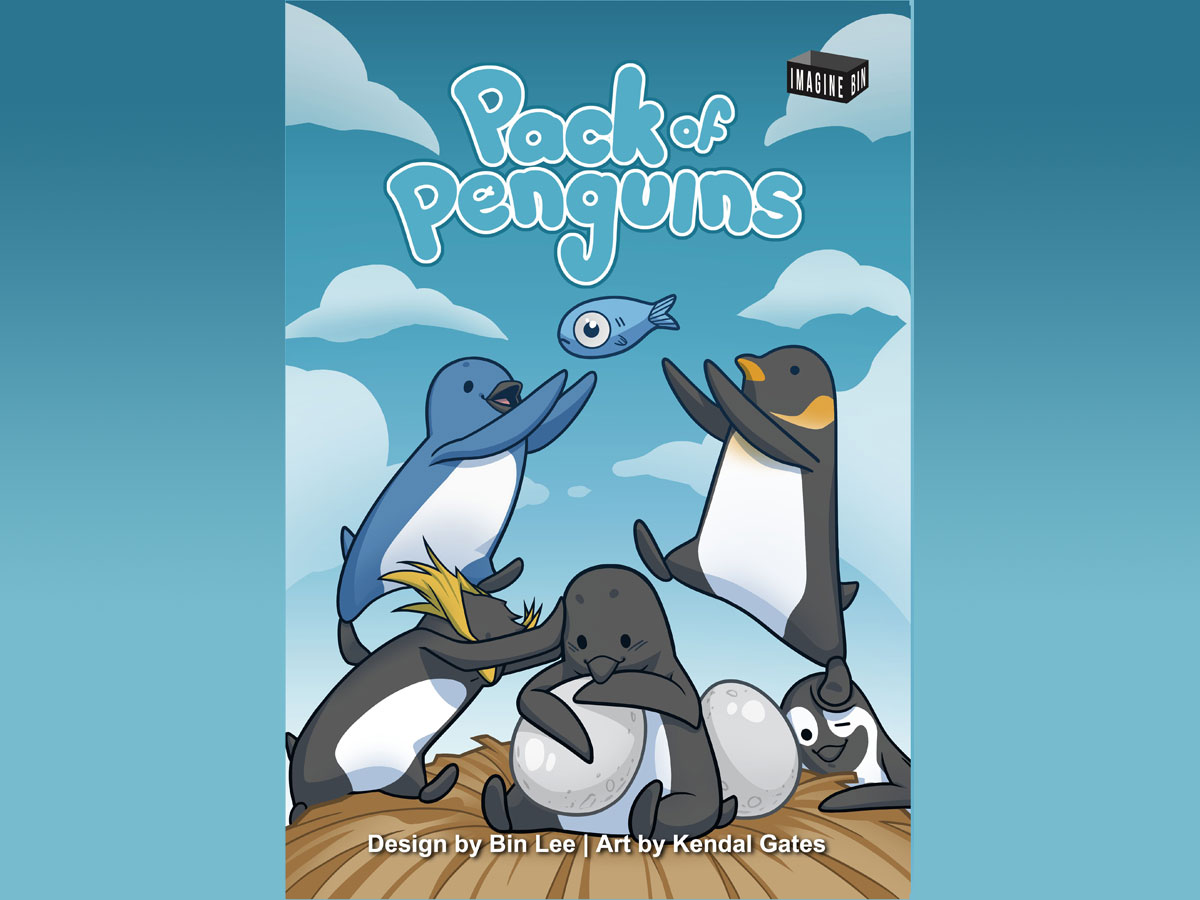
Catch fish and lay eggs to be the best of this Pack of Penguins!
What Is Pack of Penguins?
Pack of Penguins is a game for 2 to 5 players, ages 8 and up, and takes about 10 minutes to play. It’s currently seeking funding on Kickstarter, with a pledge level of $20 for a copy of the game. If your kid can compare numbers (between 1 and 50), then they can learn this game.
Pack of Penguins was designed by Bin Lee and published by Imagine Bin, with illustrations by Kendal Gates.
New to Kickstarter? Check out our crowdfunding primer.
Pack of Penguins Components
Note: My review is based on a prototype copy, so it is subject to change and may not reflect final component quality.
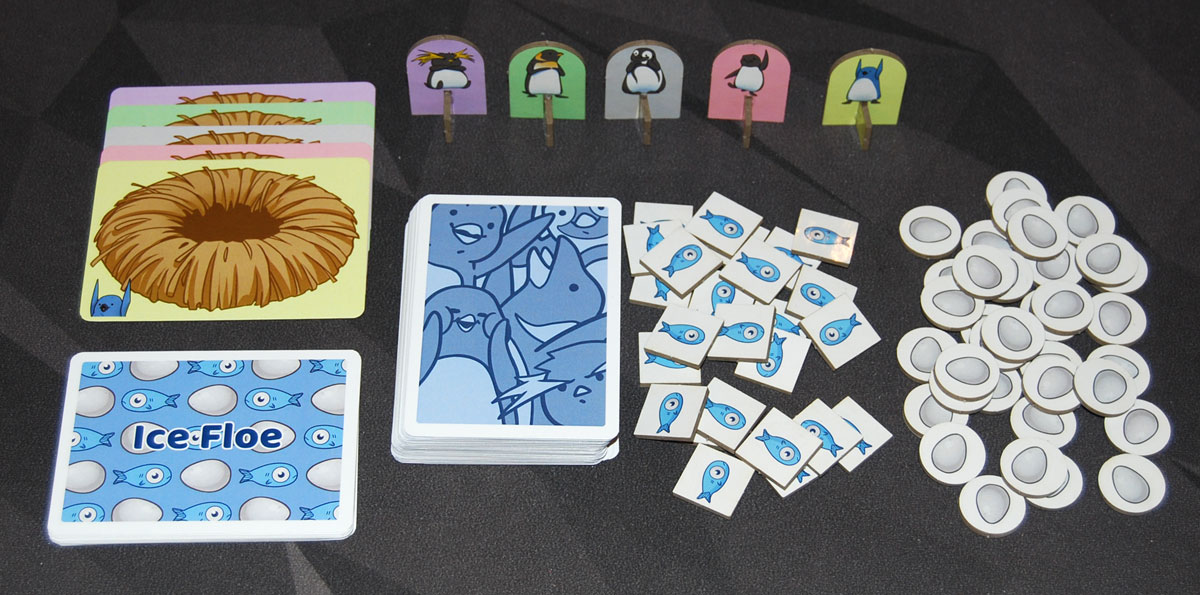
Here’s what comes in the box:
- 5 Nest cards
- 5 Penguin standees
- 15 Ice Floe cards
- 50 Penguin cards
- 25 Fish tokens
- 45 Egg tokens
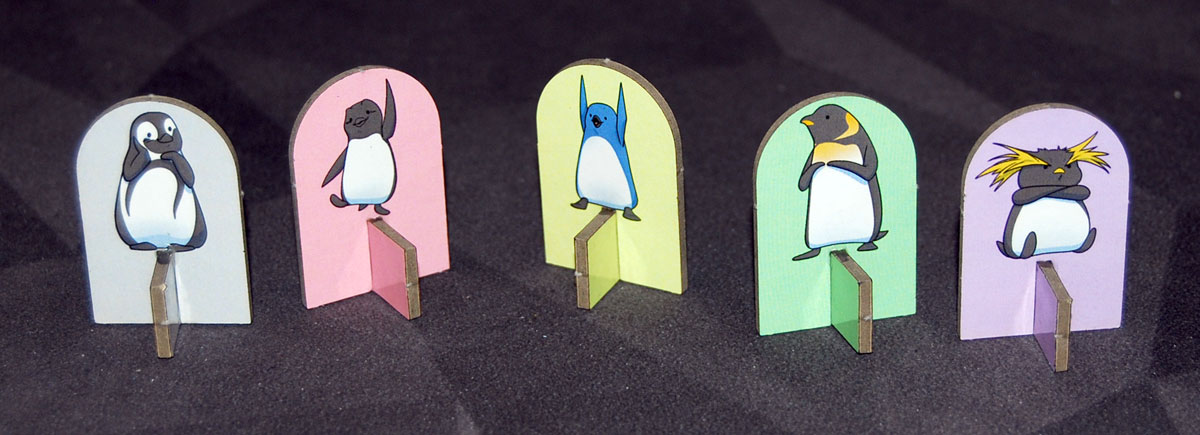
Nothing too complicated here: some cards and some tokens and standees. The illustrations on the standees are cute, showing five different types of penguins (which are also identified on the back of the rulebook). The penguins also appear in the corner of the nests to make it easier to tell who’s who, in addition to the colored backgrounds of the nest cards.
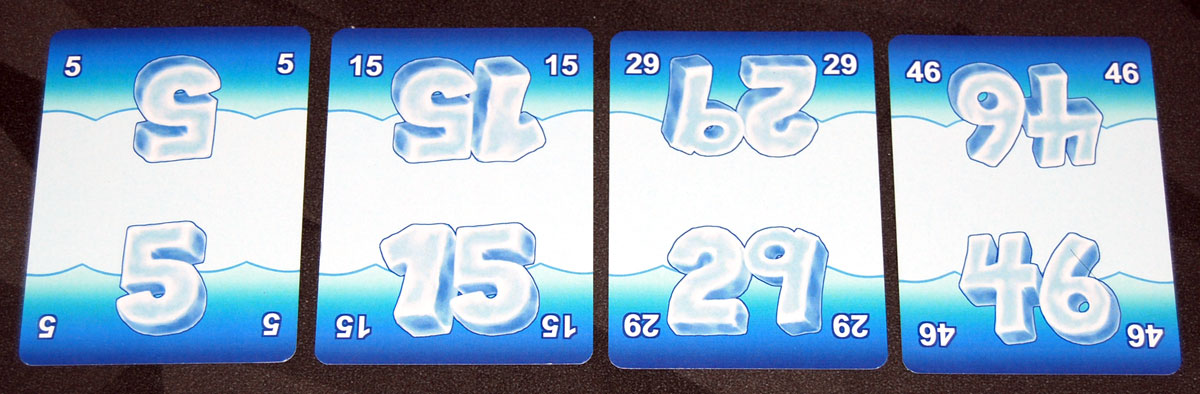
The penguin cards are very straightforward: each one has a number from 1 to 50, printed in two orientations to make it easy for anyone to read upside-down, and also indexed in all four corners. It would be cute to have some illustrations on these, but they serve their purpose just fine.
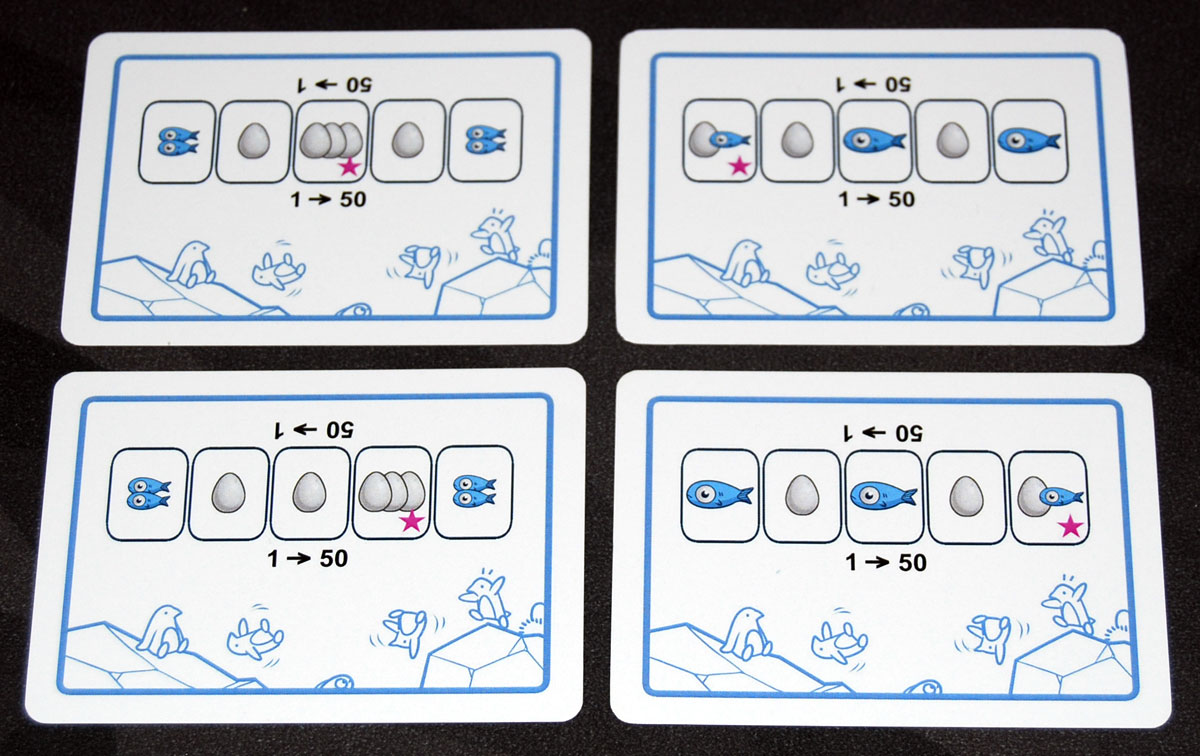
The ice floe cards have five boxes, each showing some combination of fish and eggs, as well as a little notation indicating the direction of the number line from 1 to 50. The cards have a cute little image of penguins on the ice at the bottom; the rewards line and the number indicator are a little unpolished, but easy to read.
The whole game comes in a small box, so it’s compact and easy to take anywhere.
How to Play Pack of Penguins
The Goal
The goal is to have the most eggs at the end of the game.
Setup
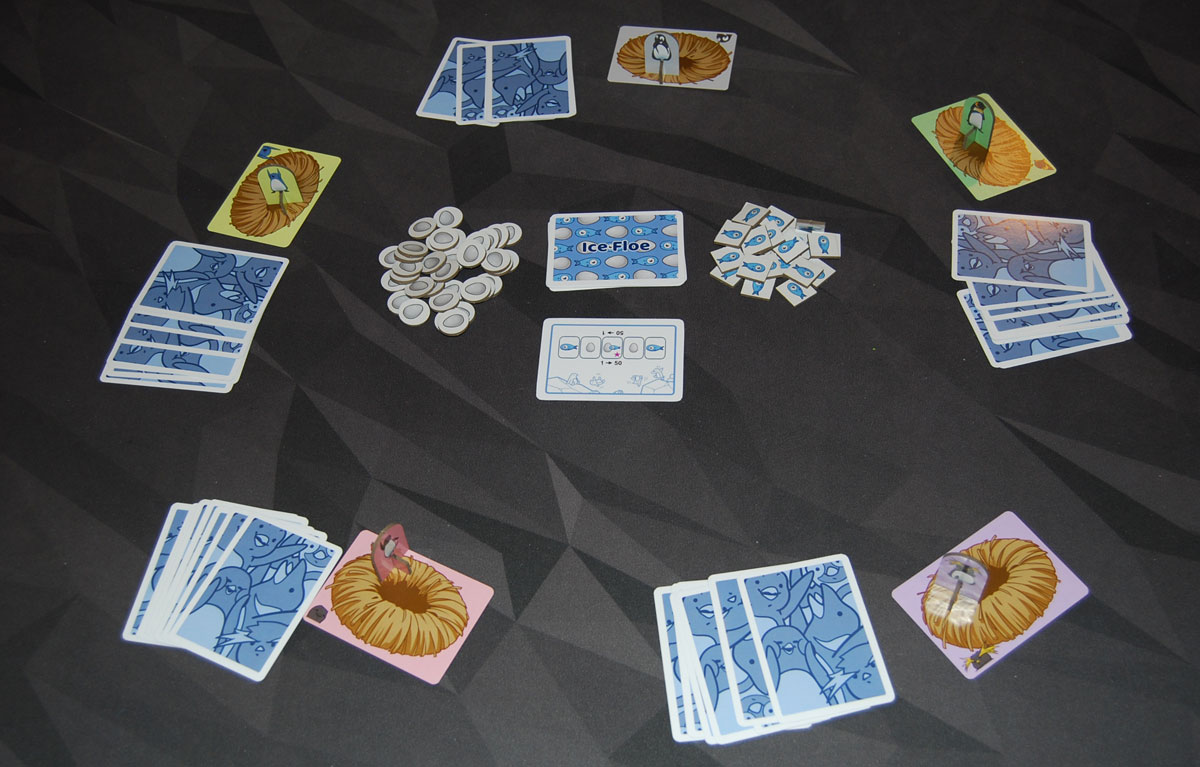
Make a supply of the eggs and fish.
Shuffle the ice floe cards and make a stack of 7 cards, putting the rest in the box. Reveal the first ice floe card.
Shuffle the penguin cards and deal 8 to each player.
Give each player a nest card and matching penguin standee.
Choose a starting player at random. (My suggestion: the player who most recently laid an egg or ate a fish.)
(When playing with fewer than 5 players, there will be some stacks of penguin cards for the automated players as well.)
Gameplay
The game is played over the course of 7 rounds, one for each ice floe.
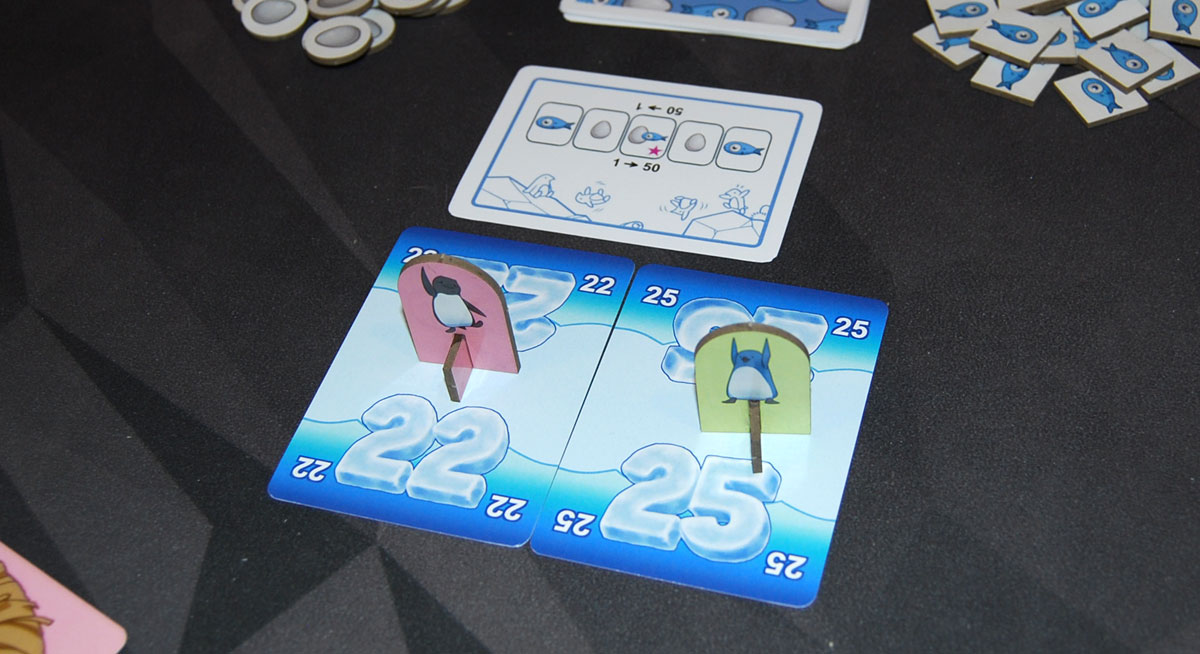
In turn order, each player plays a penguin card from their hand into a number line next to the ice floe card, arranging them so that the cards are in increasing order (matching the ice floe card), and placing their penguin on their card.
(With fewer than 5 players, the dummy players will play cards to the line first so that there’s always a total of 5 penguin cards played to the line.)
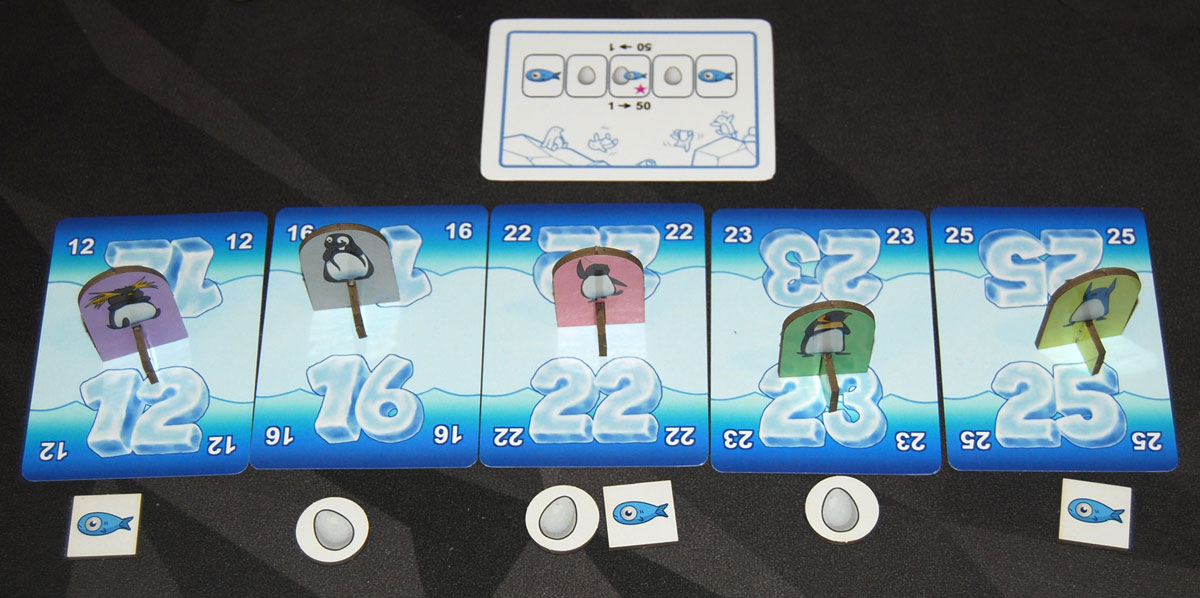
Once five penguin cards have been played, check the ice floe card and give everyone fish and/or eggs according to their location in the number line. The player at the location with the red star (which also has the best reward) will go first in the next round.
Discard the penguin cards and the ice floe card, return all the penguins, and then reveal the next ice floe card.
Game End
The game ends after 7 rounds. (Players will have one penguin card left over, which is just discarded.)
The player(s) with the fewest fish must discard 2 eggs each.
The player with the most eggs wins, with ties going to the player with the most fish.
2-Player Rules
In a 2-player game, each player gets 2 penguins and 12 penguin cards, and you only use 2 ice floes. Players will alternate playing penguin cards until each player has played one for each of their penguins, keeping their rewards separate, and final score is the total between your two penguins.
Why You Should Play Pack of Penguins
Pack of Penguins is a quick little game that reminds me a little bit of Go Nuts for Donuts: there’s a line of rewards and everyone is trying to get the one they want. In this instance, however, instead of choosing simultaneously (and occasionally smashing the donuts), the penguins are jockeying for position, squeezing into the line and hoping to end up in the best position to collect fish and eggs.
Of course, the best position changes from round to round, as does the relative value of what’s considered “best.” On one ice floe, the highest reward might be 3 eggs and require the lowest penguin card; on another, the highest reward may be 1 egg and 1 fish, and needs the 4th highest card. Unless you have the 1 or the 50, there’s never a guarantee that the card you play will get you into a particular place in the line, so going last gives you a big advantage.
Even then, you’re limited by the cards in your hand. You’re dealt all of the cards at the start of the game, and you don’t draw any more. That means you can strategize a little bit about when to use highest cards or lowest cards, or whether to spend cards that are very close to each other sooner so that you have more flexibility later in the game.
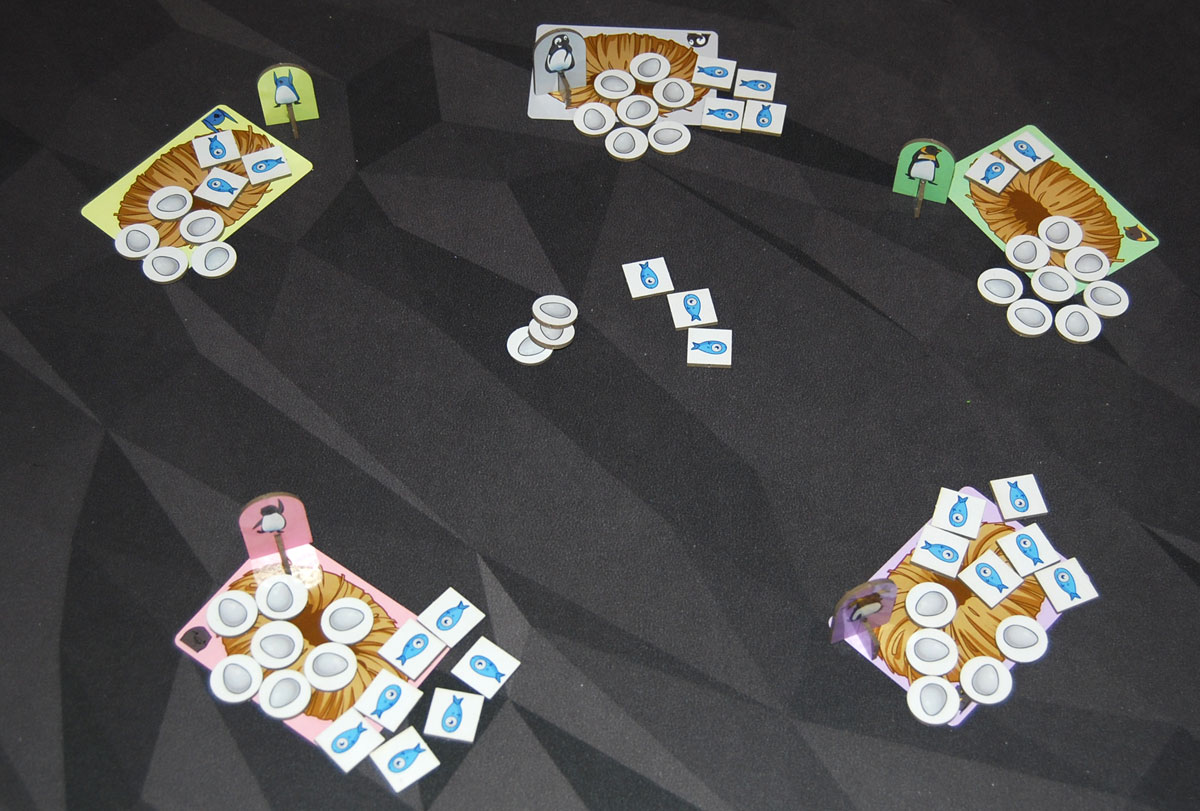
The two different rewards—eggs and fish—are a clever mechanic. Fish aren’t worth points in themselves, so they’re not as valuable as eggs. However, losing 2 eggs at the end could end up costing you the game (as it did for the green player in the game shown in the photo above), so you really want to track who has the fewest fish and try to stay ahead of them.
All in all, it’s a cute game, not especially deep but I’ve had fun playing with my kids and even with my adult gamers as a way to kick off a game night or while we’re waiting for everyone to arrive. If you love penguins and a light bit of “take that,” waddle on over and take a look!
For more information or to make a pledge, visit the Pack of Penguins Kickstarter page!
Click here to see all our tabletop game reviews.
 To subscribe to GeekDad’s tabletop gaming coverage, please copy this link and add it to your RSS reader.
Disclosure: GeekDad received a prototype of this game for review purposes.