Today I’m back to my stacks of AI-related books, this time with several novels that feature AI characters, as well as a graphic memoir that also offers a really interesting perspective on the subject.
There are actually a couple books from this pile that I started and gave up on. An older book involved an AI that for some reason was forced to live like a human—like despite the fact that it could process things incredibly quickly, it had to simulate life in real-time, including things like sleeping and eating and hygiene and walking across the college campus rather than just appearing in the destination. I didn’t get very far into that one. Another one just felt a bit off—it was about a college professor who had been resisting using AI for some time and finally used it to make a class outline … and immediately had such a strong bond with the AI that she named it after her deceased child. There were passages that seemed suspect, and when I flipped to the back of the book, I discovered that it was in fact an “ethical collaboration” with AI. No thanks. I’m not even going to bother linking to it because I’d rather it just fade away in obscurity.
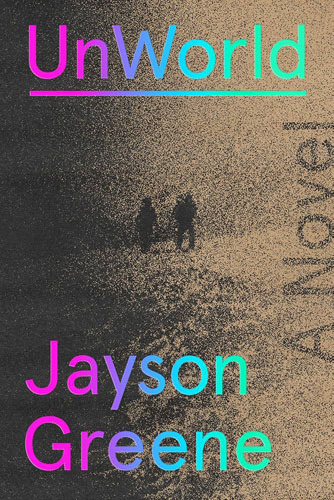
UnWorld by Jayson Greene
The plot of UnWorld revolves around a parent’s worst nightmare: the death of a child. Alex was sixteen when he died, and his parents Anna and Rick react to their grief in very different ways. Anna wants to know more: what happened and why? Samantha, Alex’s best friend, was with him when he died and she has a sense that there was something more to his death than an accident, but for Rick her presence just reminds him of his loss and he would rather pretend everything is back to normal.
And then there’s Aviva. Anna had an “upload,” something like a digital assistant except that it stores your memories and is almost like a second self. You can talk to your upload like a sounding board, or ask it to do various tasks (like attending phone meetings, since it speaks with your own voice). Aviva is Anna’s upload, and her grief for Alex’s death is unmoderated and impossible; she wants to be separated from Anna and become free.
There were parts of the book that really intrigued me, but I had a hard time with Rick, who just seemed like a selfish man-baby. Granted, we primarily see him from Anna’s perspective, but he just doesn’t come across as a sympathetic character at all and I found him really grating whenever he appeared. I read that Jayson Greene actually did lose a child—he wrote a memoir about it—and it made me wonder if his portrayal of Rick was based at all on himself, or if he saw himself more in Anna’s shoes.
The book, which is told from the point of view of several different characters, digs into a lot of big questions. Among them: if AI actually became conscious, what would that mean for us and for them? Is it fair to create intelligent “life” but have it constrained to do our bidding? What sorts of rights would it have? There’s also some explorations of memory and thought and the way that the uploads affect it—it makes Anna wonder how much she can trust her own memories; the fact that Alex spent a lot of time talking to Aviva also means that they have memories that Anna doesn’t share.

Artificial Wisdom by Thomas R. Weaver
The world has been severely damaged by climate change—a decade ago, a strange heat wave hit the Persian Gulft and 160 million died. Now, the world is finally ready to elect a Protector, a global leader with unprecedented power to address the climate crisis. Nobody expected that the field would drop to two candidates so quickly, nor that the top two would be the US President and Solomon, an artificial intelligence that governs the independent floating islands.
Marcus Tully is a reporter, and he lost his wife to the heat wave. So when he gets a tip that President Lockwood may have had something to do with the heat wave, he pursues the story, eventually finding himself at the Floating States, a group of dome-covered islands in the Atlantic populated by those wealthy or influential enough to ride out the climate crisis in comfort.
Artificial Wisdom is set a few decades in the future, but you can see a lot of its roots in the present: billionaires with their tech-based solutions that don’t seem to trickle down, journalism that depends on teams of influencers and micropayments to stay afloat, “neuro-reality” links for communication that are supposedly immune to deepfakes. Solomon, once we finally meet him, is also an interesting character; he’s been designed to make decisions for the Floating States and is capable of processing millions of data points to make decisions (much more capably than current LLM-based “AI”), but was also programmed not to have an ego that would influence those decisions.
However, his designer had her own secrets, as Tully discovers after she is murdered. While digging for clues, he uncovers a conspiracy–but who is really behind it? Is it safer to give this power to a clearly flawed human or to an AI with unknown hidden programming? As I neared the end of this 400-page book, I was surprised by how many new twists kept popping up just as I thought we’d already hit the big reveal. As it turns out, Artificial Wisdom is just the start, because it ends on a cliffhanger and you’ll have to wait until the next book to see where it goes from here.

Murder by Memory by Olivia Waite
Here’s another murder mystery, though one that wraps up in a slim 100 pages. Dorothy Gentleman is a ship detective on the Fairweather, an interstellar cruise ship. People on the ship are basically immortal: their memories are backed up regularly, and if the body you’re in is damaged, diseased, or simply too old, you just get your brain decanted into a new one. And if you’re not ready for corporeal life and want a bit of a break, that’s easily arranged too—your mind just sits in storage until you want to come out again.
But when Dorothy wakes up from her extended rest, she finds herself in somebody else’s body, apparently having just sabotaged the Library where minds are stored—the only way to truly kill somebody. Working with the ship’s AI, Dorothy has to solve this mystery before anyone else gets permanently wiped.
This one was a fun one—a bit of a cozy mystery, but in space! It’s a fun exploration of some of the consequences of extended lifetimes aboard an enclosed space—what happens to your stuff? Do you have to keep the same job for centuries? What about relationships?
I see that there’s a second Dorothy Gentleman book coming out in March, so I’m excited to see what sort of mystery she’ll be investigating next.

Artificial: A Love Story by Amy Kurzweil
Back in 2018 I wrote about Flying Couch, Amy Kurzweil’s graphic memoir. It’s about growing up Jewish in America, especially contrasted with her grandmother’s experiences surviving the Holocaust. Amy’s father is Ray Kurzweil, a noted futurist, but he did not really appear in the memoir. I came across Artificial in the bookstore and decided to get a copy because it looked interesting.
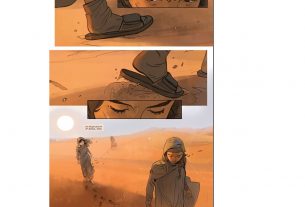
Artificial is very much about her dad, and in particular his project to build a chatbot with his father’s voice. He has a huge collection of documents about Fredric Kurzweil, a conductor and pianist who managed to flee the Nazis in part because his music attracted the attention of an American benefactor. Amy recounts conversations with her dad, visits to the storage unit, interactions with her boyfriend. She has to decipher Fredric’s difficult handwriting and transcribe it—and then they work with a company that builds a chatbot so she can have a conversation with it. But does it sound like her grandfather?
This book was first published in 2023, and this chatbot project predates our current LLMs. The chatbot isn’t nearly as sophisticated and wouldn’t pass the Turing test; some of its responses are just repeating passages of text that touch on the same topics but aren’t actually replying to the questions. That said, the process of building the bot teaches Amy a lot about both her grandfather and her father. It’s about memory and attention.
This is a big book—it’s over 300 pages, not even counting the endnotes section, and it’s also a large-format book. The story meanders a bit as Amy includes a lot of slice-of-life stuff, so it is about her as much as it is about her dad and grandfather, and I really enjoyed seeing this portrayal of Ray Kurzweil in particular. You see his efforts at biohacking his body, but also his funny habits like putting his carryon items in a paper grocery sack because airlines won’t make you check it. I really liked seeing Ray through the eyes of his daughter.

Operation Bounce House by Matt Dinniman
How does Matt Dinniman, author of the Dungeon Crawler Carl series, manage to find the time to write a separate 430-page novel even while every DCC book is larger than the last? I have no idea, but I’m not complaining.
Operation Bounce House takes place in a future where humans have spread to other stars: colonists take the generations-long trip to a new planet, where their descendants build their settlements while bots construct a transfer gate back to Earth. So it’s been about 200 years since the residents of New Sonora have had full contact with Earth. Not much of the planet is actually settled—there’s a big city on the other side of the continent, and a much smaller settlement with some family farms near the coast.
Oliver and his friends, mostly in their twenties, have grown up on New Sonora—their grandparents were the first generation to move to the planet, but their parents’ generations were all wiped out in adulthood by a mysterious illness that seems to have been fixed. As the older generation is retiring or dying off, these young adults are looking forward to the time when instant travel back to Earth is available. But when the gate opens, they’re surprised to discover that Apex Industries has been hired to evict them. And to maximize profits, Apex has turned it into a videogame: players pay big bucks for the opportunity to remotely pilot 3D-printed mechs, and are told that they’re battling dangerous insurgents that have taken over New Sonora.
As with Dungeon Crawler Carl, there’s a lot of game-related plot in this book, like discussing the various models of mechs and their capabilities, though there’s also a bit more real life storyline, because for the famers this isn’t actually a videogame. Oliver has a fleet of agriculture bots, overseen by an AI named Roger, and when Operation Bounce House kicks off, Roger’s perimeter defense program has just unlocked itself. It turns out Oliver’s grandpa knew a bit more about these honeybee bots than he’d let on, and with Roger’s help the farmers start mounting their defense.
There are definitely parallels between this far-flung sci-fi tale and the current state of the world. Farm workers being portrayed by the government as dangerous terrorists? Dehumanizing an entire population, and then deputizing untrained people to act as soldiers who gleefully livestream their attacks? Corporations profiting from the whole mess by playing both sides? Hmmm, maybe this rings a bell.
On top of that, though, the book refers to historical events involving AI—that is, our future. AI’s ability to generate deepfakes was eventually damaging enough that the most powerful AIs were banned on Earth, and simulating real humans came with a host of restrictions and regulations. (And then, of course, those very regulations were used to fool the mech pilots.)
This one’s a wild ride, and it’s worth reading for the joy of seeing bullies get their comeuppance.

The Universe Box by Michael Swanwick
This one’s a collection of short stories—some are more sci-fi and some would maybe be considered fantasy. The reason I’m including it in this stack is because a couple of them involve AI. One, called “Artificial People,” is told from the point of view of Raphael, who’s kind of like an intelligent robot. His creator wants to find some way to profit from him, but just can’t seem to do so (and gets outpaced by better technology). In the meantime, Raphael lives in short periods of activation in between long periods of shutdown, falling in love with his trainer but only seeing her once every several years. Like UnWorld, it’s a musing about the consequences of creating sentient life and what sorts of rights an artificial person would have, though in a much more compact form.
Another story, “Nirvana or Bust,” is about a scientist who has merged her consciousness with an AI—and is now being hunted by an assassin because it would be too dangerous. There’s also a time travel tale, a sort of creation tale, and a ghost story that isn’t a ghost story. I hadn’t read anything by Michael Swanwick before, but I did enjoy several of these tales, which go in all sorts of different directions.

Your Behavior Will Be Monitored by Justin Feinstein
This one isn’t due out until April, but put it on your list now—it may be one of my favorite takes on AI from this list. The book is framed as a collection of emails, chat messages, video transcripts, and more, all centered on a company called UniView, “the most trusted name in AI.” UniView has created many commercially available AI bots, including Simon, the autonomous driving bot that controls a good proportion of the vehicles now on the road. Noah is a copywriter—he’s been hired to work with Quinn, a new bot designed to create personalized ads. The launch has been accelerated, and he needs to teach Quinn about consumer motivation.
Although the book does feature superintelligent AIs beyond current capabilities, there’s just enough that’s based on current LLMs and generative AI to make it plausible. For one, the AIs in the story pursue their given objectives, often in ways that surprise or confound the humans who chose those objectives. It feels like the modern equivalent of making wishes with a genie: sure, maybe you get what you asked for, but not in the way you meant it. The AIs in the story also have a lot of control, an extrapolation of the “agentic AI” that we’re starting to experience now. UniView’s HR is run by an AI, who has the ability to send out emails, conduct interviews, and even make hiring and firing decisions.
Meanwhile, UniView’s CEO is a caricature of the legacy-obsessed tech bro (though he isn’t quite a billionaire yet). He gives TED Talks, makes broad proclamations that the software engineers then have to scramble to implement, and seems entirely clueless about human interactions. He’s too interested in chasing clout and wealth to consider any consequences.
Your Behavior Will Be Monitored is funny and scary and optimistic all at the same time. The book’s chapter headings are a countdown to launch, and you get foreshadowing that something huge happens at launch, so a lot of the book is the anticipation of what. No spoilers here, but I was both surprised and pleased when I discovered what it was.
Disclosure: I received review copies of the books in today’s column (except Artificial: A Love Story, which I purchased myself). Affiliate links to Bookshop.org help support my writing and independent booksellers instead of billionaire tech bros.